
Specification-Grade Substrate Preparation
Flatness correction, deflection verification (L/360), crack-isolation and uncoupling membranes, and wet-area waterproofing — the substrate engineering every porcelain and natural-stone floor in Accra needs, prepared to ANSI A108 flatness for large-format tile. Tilers Ghana, since 1976.
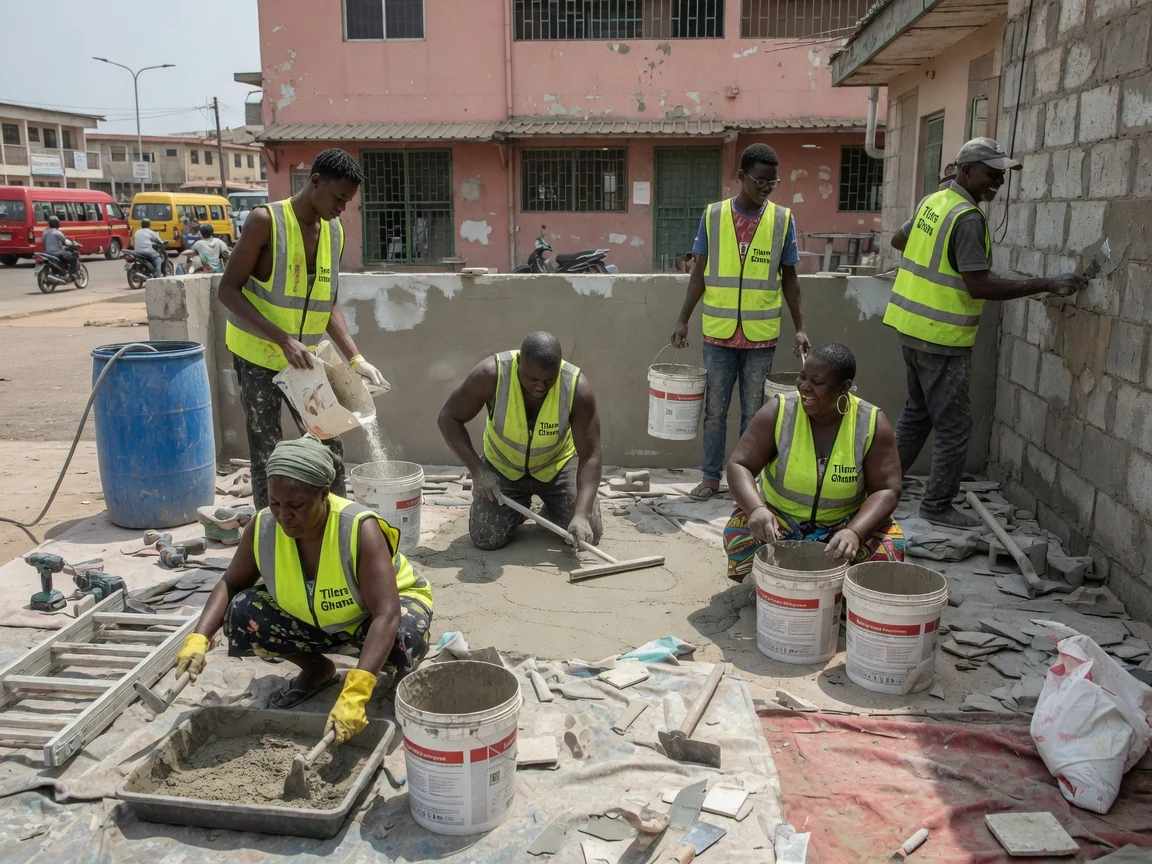
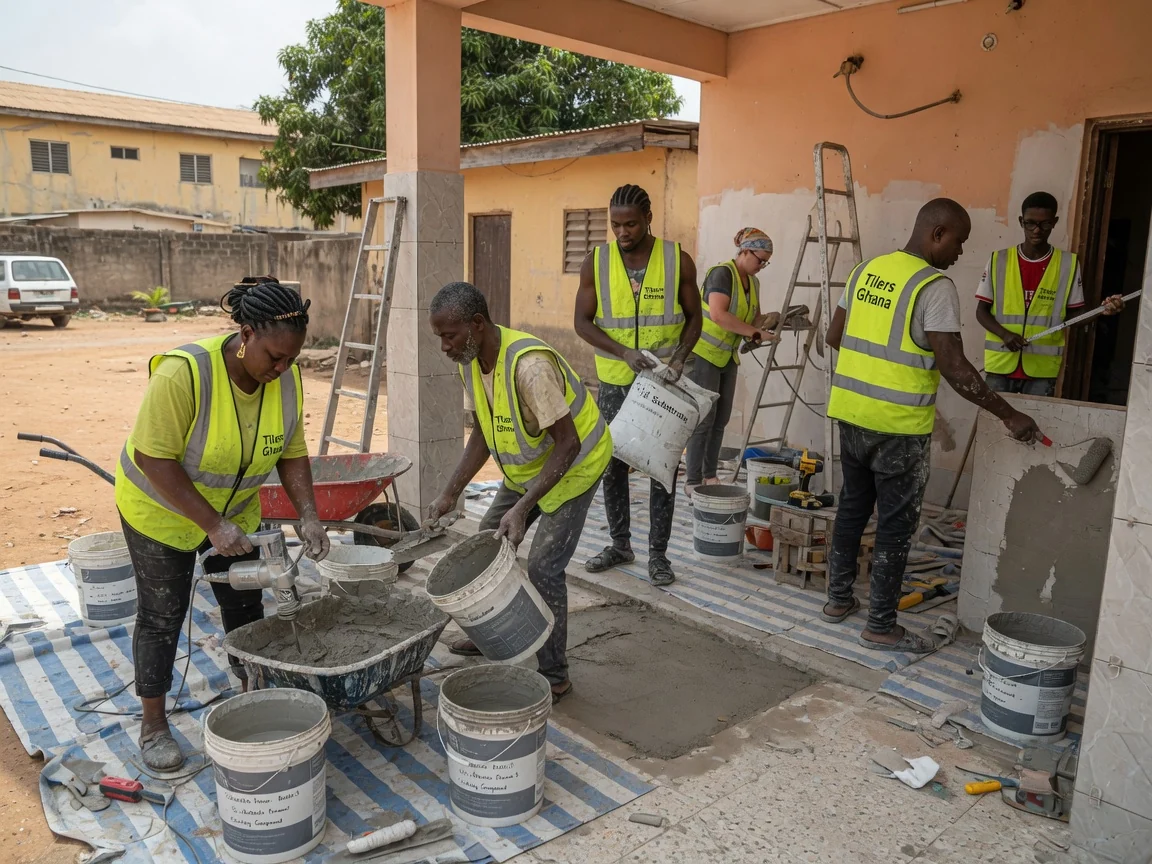
Substrate preparation is the engineering beneath every tile floor — flatness, deflection control, crack isolation and waterproofing. Without it, porcelain and stone crack along the joints, sound hollow underfoot, or show lippage at every edge. It is the foundation that decides whether a finished floor holds for decades or fails within a season, and it is invisible once the tile goes down. Tilers Ghana has engineered tile substrates across Accra since 1976.
Why Substrate Preparation Decides the Tile Floor in Ghana’s Conditions
A tile floor is only as sound as the bed beneath it, and in Ghana’s conditions that bed is under pressure. With average humidity around 81–83% and a great deal of tiling laid over young or still-moving concrete slabs, the substrate must be controlled before any adhesive is opened. For tile, the governing concerns are flatness, deflection and movement isolation — not the slab-moisture testing regimes used for resin and epoxy coatings, which do not apply to a tiled floor.
The controls are specific. Flatness must be brought to ANSI A108 — within ≤3 mm under a 2.4 m straightedge for large-format tile, because the bigger the tile, the less it forgives a dip. Structural deflection must sit within L/360 for tile, and within the tighter L/720 for natural stone, or rigid tiles crack and joints open. Where the slab is young or already cracked, a crack-isolation/uncoupling membrane to ANSI A118.12 isolates the tile from movement below. And in showers, wet rooms and pool surrounds, a bonded waterproofing membrane to ANSI A118.10 keeps water off the substrate entirely. Get the bed right and the floor lasts; get it wrong and no quality of tile or adhesive can save it.
Substrate Preparation We Deliver in Accra
Flatness Correction & Self-Levelling
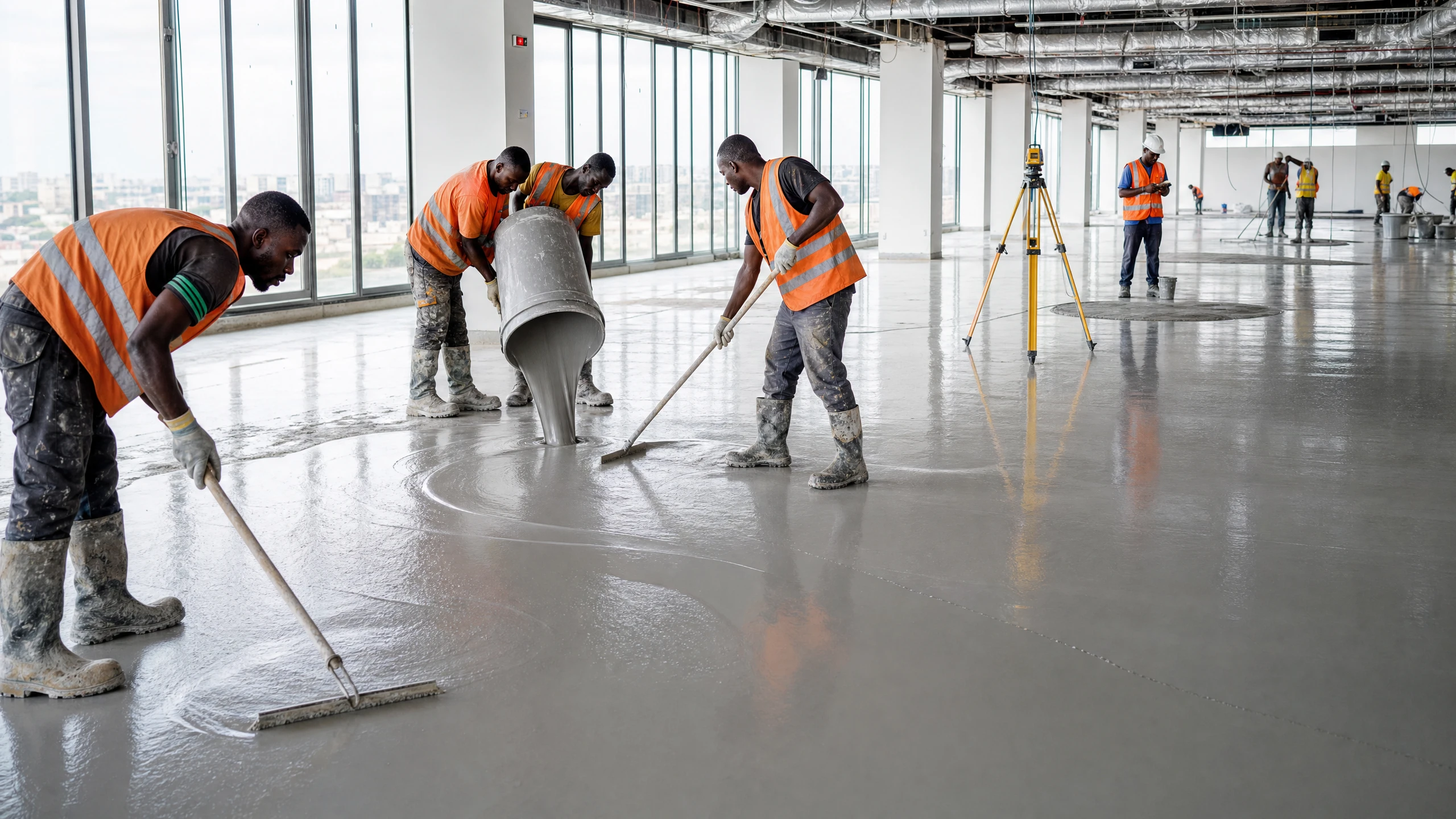
We map the floor with a straightedge, grind down high spots, and pour polymer-modified self-levelling underlayment into the low areas to bring the surface within ANSI A108 flatness — ≤3 mm under a 2.4 m straightedge for large-format work. Flatness is the single most common reason large-format porcelain shows lippage, and it is corrected at the substrate, never hidden under extra adhesive.
Crack-Isolation & Uncoupling Membranes
Where the slab is young, cracked, or expected to move, we install a crack-isolation/uncoupling membrane to ANSI A118.12. This anti-fracture layer isolates the tile from the substrate so a crack below does not telegraph through the finished floor — essential over green concrete, mixed substrates and any deck carrying structural movement.
Wet-Area Waterproofing
For showers, wet rooms, balconies and pool surrounds we install a bonded waterproofing membrane to ANSI A118.10, forming the correct falls to drains and continuous upturns where the floor meets the wall. The waterproofing sits behind the tile and protects the substrate and the structure from water that grout and tile alone never fully stop.
Deflection & Movement-Joint Detailing
Before any membrane or levelling, we verify the deck is stiff enough — within L/360 for tile and L/720 for natural stone — because a substrate that flexes beyond tolerance cracks rigid tile regardless of how it is bedded. We then detail movement and expansion joints to TCNA EJ171 so the finished floor can absorb thermal and structural movement without tenting or cracking.

The Substrate Doctrine
| Standard | What it governs | Why it decides the floor |
|---|---|---|
| ANSI A108 | Flatness tolerance for tile, including large-format — ≤3 mm under a 2.4 m straightedge | Flatness fixed here determines whether large-format porcelain shows lippage or sits flush; the bigger the tile, the tighter the tolerance |
| ANSI A118.10 | Bonded waterproofing membrane for wet areas | A continuous bonded membrane behind the tile keeps water off the substrate and structure in showers, wet rooms and pool surrounds |
| ANSI A118.12 | Crack-isolation / uncoupling membranes | An anti-fracture layer isolates the tile from substrate cracking and movement so cracks below do not telegraph through |
| ISO 13007 | Adhesive classification — C2 S1/S2 set over the prepared bed | The prepared substrate is only sound if the adhesive that follows is deformable enough; C2 S1/S2 absorbs movement the membrane does not |
| TCNA EJ171 | Movement and expansion joints | Correctly placed movement joints let the finished floor absorb thermal and structural movement without tenting or cracking |
| Substrate deflection (L/360 tile, L/720 stone) | Structural stiffness of the deck beneath the tile | Deflection beyond tolerance cracks rigid tile and stone and opens joints; stiffness must be confirmed before any bedding |
How We Prepare a Tiling Substrate
- Survey & flatness mapping — we map flatness across the floor against a 2.4 m straightedge to the ANSI A108 target of ≤3 mm for large-format, check structural deflection (L/360 for tile, L/720 for natural stone), and document moisture, cracks and joints before any work begins.
- Crack isolation & levelling — high spots are ground down and low areas filled with polymer-modified self-levelling underlayment to flatness; cracks are treated and a crack-isolation/uncoupling membrane is installed per ANSI A118.12 wherever movement is expected.
- Waterproofing where wet — in showers and wet rooms we install a bonded waterproofing membrane to ANSI A118.10, forming the correct falls to drains and continuous upturns at the walls.
- Verification & handover — flatness is re-checked, a written substrate report is issued, and the floor is signed over to the tiling crew on a documented handover before a single tile is set.
Matching Preparation to the Tile
| Tile type | Flatness target | Key prep |
|---|---|---|
| Large-format porcelain | ≤3 mm under a 2.4 m straightedge (ANSI A108) | Self-levelling to flatness plus full adhesive coverage over the prepared bed |
| Natural stone | Flat, with deflection within L/720 | Stiffer deck verified to L/720, white deformable bed, flatness confirmed before setting |
| Wet area (shower, pool, balcony) | Flat with correct falls to drain | Bonded waterproofing membrane to ANSI A118.10 with falls and upturns |
| Over young or cracked slab | Flat once isolated | Crack-isolation/uncoupling membrane to ANSI A118.12 to absorb movement below |
What Affects the Cost
- The flatness deviation found on survey and the depth of self-levelling required to correct it
- The membranes specified — crack-isolation/uncoupling and wet-area waterproofing
- Crack and movement-joint remediation across the deck
- The area, access and complexity of the floor
Every quote follows a site survey — no fixed rate before the substrate is assessed.
Applications Across Ghana
- Large-format and natural-stone floors needing flat, stiff beds in Cantonments and East Legon
- Wet rooms, showers and pool surrounds needing bonded waterproofing in Airport City
- Commercial floors laid over young or moving slabs in Spintex and Tema, isolated with uncoupling membranes
Areas We Serve
Tilers Ghana prepares tiling substrates across East Legon, Cantonments, Airport Residential, Spintex, and Tema — plus Greater Accra.
Related Services
- Large-Format Porcelain Tile Installation — rectified-edge porcelain panels that depend on a flat, engineered bed
- Natural Stone Installation — marble, granite and stone set over deflection-verified substrates
- Anti-Slip & Wet Area Tiling — slip-rated finishes over the bonded waterproofing we install
- Heated Floor Tile Systems — warm-floor systems set on prepared, uncoupled substrates
Frequently Asked Questions
Why does substrate preparation matter for tiling? Most tile failures — lippage, hollow-sounding tiles, cracks telegraphing through the floor — trace back to the substrate, not the tile. Large-format porcelain and natural stone are unforgiving of flatness and movement, so the bed is engineered first: flat, stiff enough to stay within deflection limits, and isolated from any cracking below.
What is an uncoupling membrane? An uncoupling membrane is an anti-fracture layer installed per ANSI A118.12 that isolates the tile from the substrate beneath it. If the slab below cracks or moves, the membrane absorbs that movement so the crack does not telegraph up through the tile and grout.
How flat does a substrate need to be? Large-format porcelain needs the substrate within ≤3 mm under a 2.4 m straightedge per ANSI A108. The bigger the tile, the tighter the flatness tolerance, because a long rigid tile bridges any dip in the floor and shows it as lippage or a hollow spot.
How much does substrate preparation cost? Cost is quoted on survey, because it varies with the flatness deviation, the depth of levelling required, the membranes specified — uncoupling or waterproofing — and the area and access. We never give a fixed rate before the substrate is assessed.