
Le problème
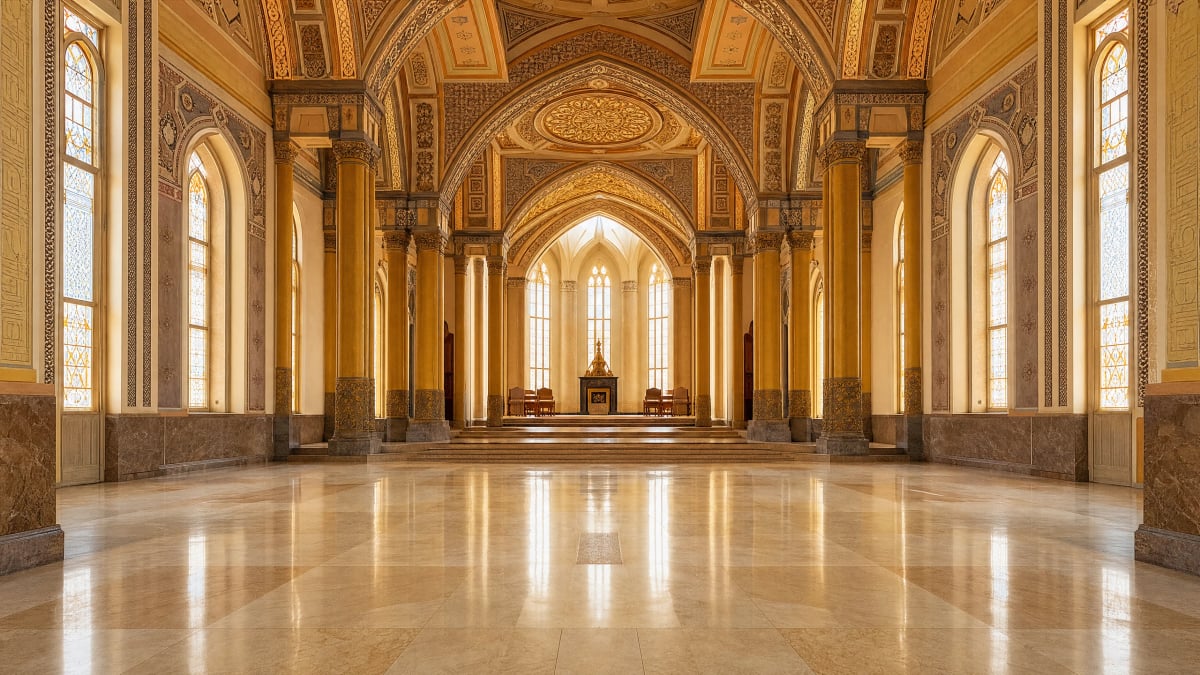
Mosques, churches, and religious institutional buildings have specification requirements rooted in liturgical use, scale, and acoustic profile that secular installers often miss.
Notre approche
Tilers Ghana provides culturally-informed tile specification, mosaic feature work, and heritage restoration for religious institutional commissions across mosques, churches, and faith-community buildings.
Tilers Ghana provides culturally-informed tile specification, mosaic feature work, and heritage restoration for religious institutional commissions across mosques, churches, and faith-community buildings.
The Challenge
Religious and faith-community buildings occupy a singular position in Ghana’s built environment. They are spaces where architectural permanence is not merely preferred — it is expected. A mosque’s ablution court, a cathedral’s nave floor, a community chapel’s entrance threshold: each surface must withstand concentrated foot traffic across decades while remaining consonant with the cultural and spiritual identity of the congregation it serves. Standard residential or light-commercial tile specifications are categorically insufficient for these commissions.
The challenge deepens when heritage restoration enters the brief. Older faith buildings across Accra, Kumasi, and the coastal belt carry original tilework — hydraulic encaustic, hand-laid terrazzo borders, imported Victorian geometric patterns — that requires matching, stabilisation, and sensitive integration with contemporary specification-grade systems. Finding a practice with both the technical depth to specify structural-grade materials and the cultural literacy to interpret these commissions correctly is a gap most clients discover only after a misaligned engagement has already caused delay or irreversible damage.
The Tilers Ghana Solution
Since 1976 — 50 years of institutional practice — Tilers Ghana has developed a dedicated methodology for religious and cultural commissions. The approach begins with a pre-specification audit: understanding the congregation’s identity, the architectural language of the building, the liturgical function of each zone, and the structural loading profile of the substrate. From this foundation, the specification team assigns material systems that balance aesthetic reverence with institutional-grade performance.
Feature mosaic work — devotional walls, mihrab surrounds, baptistery niches, altar steps — is handled by Tilers Ghana’s specialist mosaic team, working in glass, natural stone, and porcelain tesserae to deliver compositions of lasting visual weight. For heritage restoration briefs, the team maintains access to period-matched hydraulic and encaustic tile sources alongside hand-mixed grout formulations calibrated to historic joints. Every installation is executed to specification-grade tolerances: lippage, joint width, adhesive coverage, and curing protocol are all documented and signed off before the space is handed back to the client.
Material + System Specification
- Large-format porcelain (600×600 to 1200×1200 mm, R10–R11 slip-rated) for nave floors, colonnaded corridors, and assembly courts
- Glass and natural stone mosaic tesserae for feature walls, devotional alcoves, mihrab surrounds, and baptistery panels
- Hydraulic and encaustic tile for heritage restoration zones, period-matched to existing geometric or floral field patterns
- Anti-fracture membrane systems beneath all tiled surfaces on timber or movement-prone substrates — critical in older faith-building stock
- Chemical-resistant epoxy grout for ablution courts, baptisteries, and outdoor ceremonial hardstanding exposed to repeated water contact
- Threshold and border transition systems in natural marble or travertine, demarcating liturgical zones with material precision
Typical Project Profile
A typical Tilers Ghana religious institutional commission spans 400 to 4,000 square metres across internal and external surfaces — encompassing primary worship floors, ancillary gathering halls, ablution or vestry facilities, entrance plazas, and feature wall installations. Project timelines range from eight to twenty-six weeks depending on heritage complexity and mosaic scope. Clients include mosque authorities, mainline and Pentecostal church bodies, ecumenical community centres, and faith-affiliated educational campuses across Accra, Tema, Kumasi, and Ghana’s regional capitals.
Outcomes
- Specification-grade tile systems that remain structurally sound and aesthetically coherent across 30-plus years of congregation use
- Culturally informed mosaic and feature installations that reinforce the architectural identity of the faith community
- Heritage floor and wall restoration completed without disruption to the original material language of the building
- Full documentation package — material specifications, adhesive certifications, grout schedules, as-built drawings — delivered to the client on project completion
- Institutional standing supported by 50 years of practice and recognised by the Top 3 Ghana 2026 Gold Award for Tiling Specialist (T3G-2028-867743)