
Carrelage à Motifs Décoratifs
Pose de carrelage à motifs géométriques, à chevrons, façon carreaux de ciment et sur mesure pour entrées signature, sols et murs décoratifs à Accra — calepiné et validé à blanc, posé selon ANSI A108 avec mortier-colle déformable ISO 13007 et une rigueur de coupe et de joint. Tilers Ghana, depuis 1976.
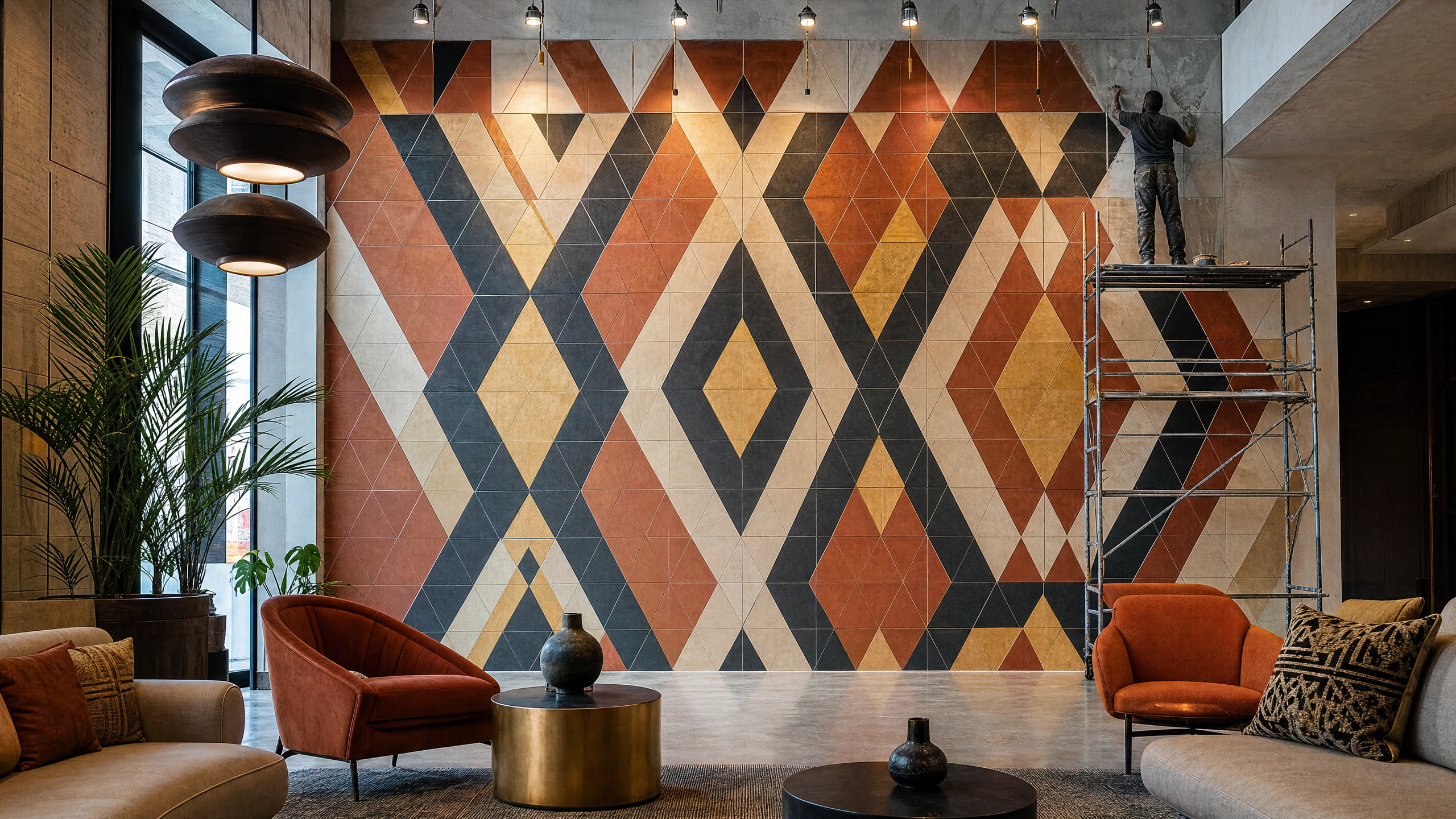
Le carrelage à motifs décoratifs est la discipline qui consiste à poser le carreau en compositions délibérées — géométriques, à chevrons, façon carreaux de ciment ou sur mesure — afin que la surface finie soit à la fois finition et identité : le médaillon d’entrée qui ancre un hall, le sol décoratif à chevrons, le mur à motifs qui nomme un espace. C’est le travail de carrelage le plus révélateur qui soit : un motif expose chaque erreur de dérive, de désaffleurement et de coupe, et exige donc le traçage, la pose à blanc et la rigueur de coupe plutôt que la seule couverture. Tilers Ghana pose du carrelage à motifs décoratifs à Accra depuis 1976.
Pourquoi le Carrelage à Motifs Décoratifs Exige de la Rigueur dans les Conditions du Ghana
Un motif ne cache rien. Là où un sol uni absorbe une légère irrégularité, une pose géométrique ou à chevrons amplifie chaque défaut — un millimètre de dérive dans le traçage, un bord désaffleuré, une coupe irrégulière se répètent sur tout le sol et brisent l’œil. Dans l’humidité relative persistante de 81 à 83 % du Ghana, le problème se compose : les unités poreuses façon carreaux de ciment absorbent l’humidité et tachent à travers le coulis si elles ne sont pas scellées au préalable, et les lits posés sur des dalles jeunes, encore en cours de cure, bougent et entraînent le motif avec eux.
La réponse réside dans la méthode. Nous posons à blanc et validons le motif complet avant tout encollage, posons sur un support aplani selon l’ANSI A108, encollons dans une colle déformable ISO 13007 C2 S1/S2 qui absorbe les contraintes mineures du support, scellons les unités poreuses façon carreaux de ciment avant le jointoiement, et traitons les joints de fractionnement selon la TCNA EJ171 pour que le sol dispose d’un exutoire. Un motif posé ainsi se lit juste et le reste.
Carrelages à Motifs Décoratifs que Nous Posons à Accra
Sols Géométriques et Façon Carreaux de Ciment
Trames géométriques délibérées et compositions façon carreaux de ciment pour entrées, courts et sols décoratifs, où le motif lui-même est la finition. Les unités façon carreaux de ciment et autres unités poreuses sont scellées avant le jointoiement pour que la face reste propre, et tout le champ est posé à blanc et validé avant qu’un seul carreau ne soit encollé.
Poses à Chevrons et en Bâtons Rompus
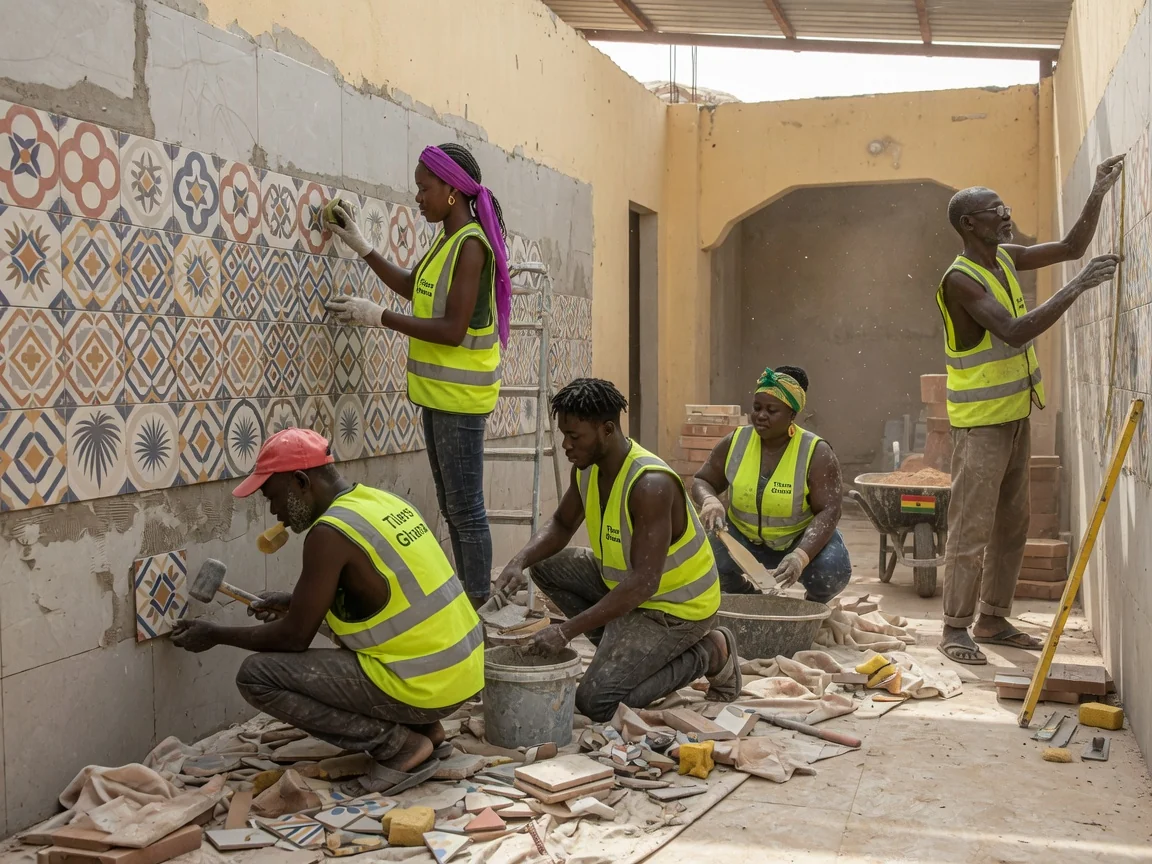
Calepins à chevrons et en bâtons rompus pour couloirs, sols décoratifs et murs, tracés à partir d’un axe central pour que la géométrie reste symétrique sur toute la longueur. La rigueur tient ici à la régularité des coupes et à la largeur de joint — des croisillons calibrés et une épure validée maintiennent l’angle juste d’un bout à l’autre.
Médaillons d’Entrée Signature
Médaillons focaux qui ancrent un hall ou un seuil, où la composition rayonne depuis un point unique. L’alignement du point focal est tracé et posé à blanc en premier, afin que le médaillon soit centré sur son axe et que le champ environnant se lise proprement vers lui.
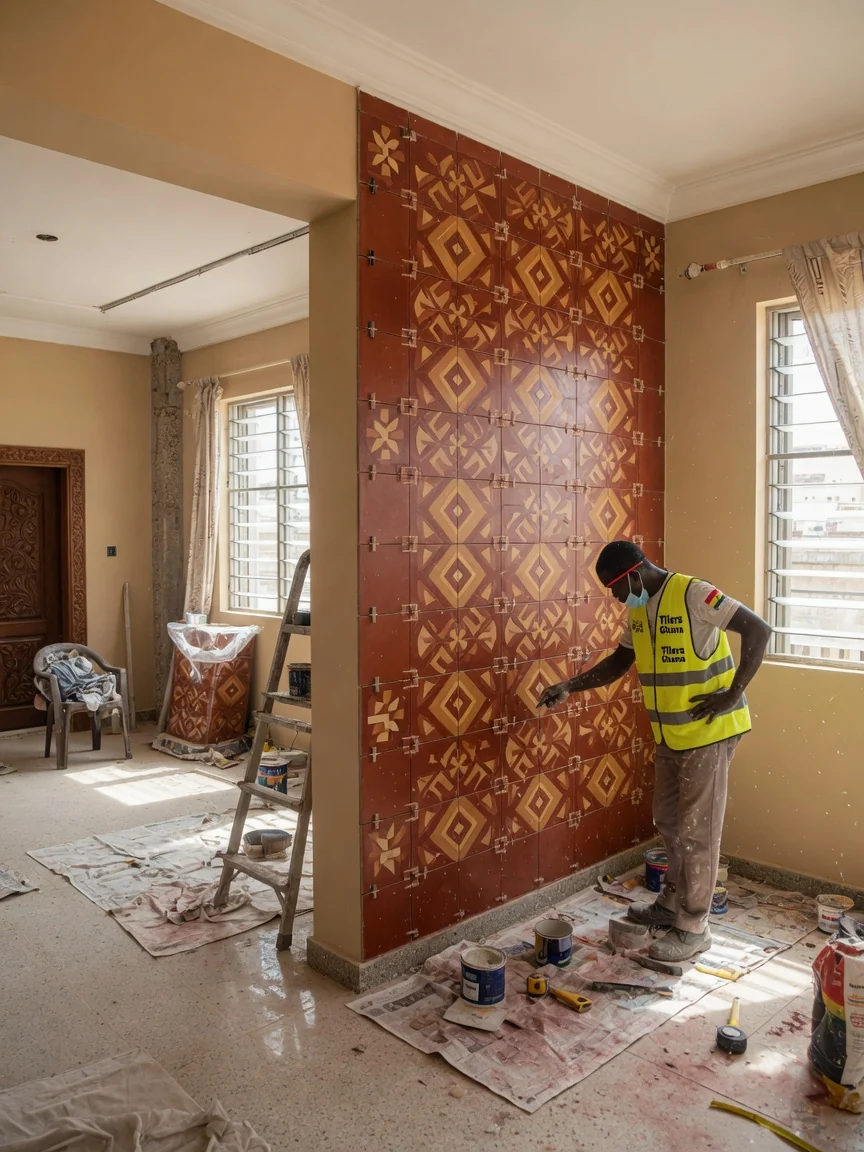
Murs Décoratifs à Motifs
Travail de motif vertical pour murs d’accueil et murs décoratifs, où chaque unité reçoit un double encollage pour un collage complet et un espacement constant. Le plan vertical ne pardonne pas le désaffleurement à hauteur d’œil, aussi l’espacement et la couverture de collage sont-ils maîtrisés carreau par carreau.
La Doctrine de Pose des Motifs
| Norme | Ce qu’elle régit | Pourquoi elle décide du sol |
|---|---|---|
| ANSI A108 | Méthode de pose, planéité du support et couverture de mortier | Fixe les seuils de planéité et de collage dont un motif a besoin pour se lire juste et rester soutenu |
| ISO 13007 | Classification des colles — déformable C2 S1/S2 | Un lit déformable absorbe les contraintes mineures du support au lieu de les transmettre au motif |
| TCNA EJ171 | Joints de fractionnement et de dilatation | Donne au sol des emplacements contrôlés de mouvement pour que le motif ne fissure ni ne dérive |
| ANSI A118 | Sélection du mortier et du coulis | Adapte la colle et le coulis au type de carreau et au trafic pour que le motif tienne dans la durée |
| Planéité et flèche du support | Planéité du support et flèche structurelle dans la limite L/360 | Un support fléchissant ou irrégulier se répercute directement à travers un motif ; il se corrige avant la pose, jamais après |
Comment Nous Posons un Sol à Motifs Décoratifs
-
Interprétation du dessin et traçage — Nous lisons la géométrie du motif, les tolérances de joint et les axes focaux sur les plans, traçons les axes centraux de la composition, et confirmons que le support est plan selon l’ANSI A108 avant d’engager le moindre carreau.
-
Pose à blanc et validation du motif — Nous posons à blanc les éléments complets du motif sur site pour valider la géométrie, l’alignement du point focal et la rigueur de coupe, en obtenant la validation de l’épure avant d’encoller.
-
Pose de précision — Les carreaux sont posés dans une colle déformable ISO 13007 C2 S1/S2 avec des croisillons calibrés, en maintenant la largeur de joint et le désaffleurement constants sur tout le motif ; les unités façon carreaux de ciment et poreuses sont scellées avant le jointoiement pour éviter les taches.
-
Jointoiement, joints de fractionnement et finition — Nous appliquons un coulis assorti, traitons les joints de fractionnement selon la TCNA EJ171, inspectons le motif fini face à un cahier de défauts écrit, et remettons un procès-verbal de contrôle qualité signé à la réception.
Choisir le Motif
| Motif | Idéal pour | Exigence de pose clé |
|---|---|---|
| Géométrique / façon carreaux de ciment | Sols décoratifs et entrées | Pose à blanc validée et scellement des unités poreuses avant jointoiement |
| Chevrons / bâtons rompus | Couloirs et sols décoratifs | Traçage à partir de l’axe central avec coupes et largeur de joint régulières |
| Médaillon | Points focaux d’entrée | Alignement du point focal tracé et validé en premier |
| Mur décoratif | Travail de motif vertical | Double encollage pour un collage complet et espacement constant |
Ce qui Influence le Coût
- Complexité du motif — les compositions plus denses et plus complexes exigent davantage de traçage et de validation
- Volume de coupe et chutes — les motifs en biais et sur mesure accroissent la coupe de précision et les déchets de découpe
- Type de carreau — les unités poreuses et façon carreaux de ciment exigent un scellement avant le jointoiement
- Support — les supports hors planéité requièrent un nivellement avant qu’un motif puisse être posé juste
- Surface et accès — la logistique de chantier, le nombre d’étages et la protection influent sur le planning
Chaque devis fait suite à un relevé sur site — aucun tarif fixe avant l’évaluation de la surface.
Applications à Travers le Ghana
- Entrées et murs décoratifs d’hôtel et d’hôtellerie à Airport City et Cantonments
- Commerces de prestige et espaces d’accueil à travers Accra
- Entrées résidentielles haut de gamme à East Legon et Airport Residential
Zones que Nous Desservons
Tilers Ghana pose du carrelage à motifs décoratifs à East Legon, Cantonments, Airport Residential, Spintex et Tema — ainsi que dans le Grand Accra.
Services Associés
- Pose de Mosaïque et de Carreaux Décoratifs
- Restauration de Carrelage Patrimonial
- Pose de Carrelage Grand Format en Grès Cérame
- Préparation du Support
Foire aux Questions
Comment garantissez-vous qu’un motif à chevrons ou géométrique reste juste ?
Il est tracé à partir d’un axe central, posé à blanc et validé avant tout encollage. Des croisillons calibrés et des coupes rigoureuses maintiennent le motif régulier sur tout le sol, de sorte que la géométrie se lit juste depuis l’entrée jusqu’au bord le plus éloigné.
Pouvez-vous reproduire un dessin sur mesure ou façon carreaux de ciment ?
Oui — nous interprétons la géométrie du motif à partir des plans, posons à blanc une épure pour validation, et coupons selon le dessin. Le carreau poreux façon carreaux de ciment est scellé avant le jointoiement pour éviter que le coulis ne tache la face du carreau.
Le motif va-t-il se fissurer ou se décaler avec le temps ?
Pas lorsqu’il est posé sur un support plan avec une colle déformable C2 S1/S2 et des joints de fractionnement corrects selon la TCNA EJ171. La dérive du motif provient d’un mauvais traçage et de lits rigides, non du motif lui-même.
Combien coûte un carrelage à motifs décoratifs ?
Le prix est établi sur relevé. Il varie selon la complexité du motif, le volume de coupe, le type de carreau et la surface — aucun tarif fixe n’est donné avant l’évaluation de la surface.